
A family field guide
A painted field guide to the creatures you keep, and the ones you find outside.
Critterbook holds 36 hand-painted creatures. Point the Bug Lens at what your kid found and it names what it sees on the phone, where the photo stays. The Journal fills in as the family finds them. Free, private, offline.
The painted guide
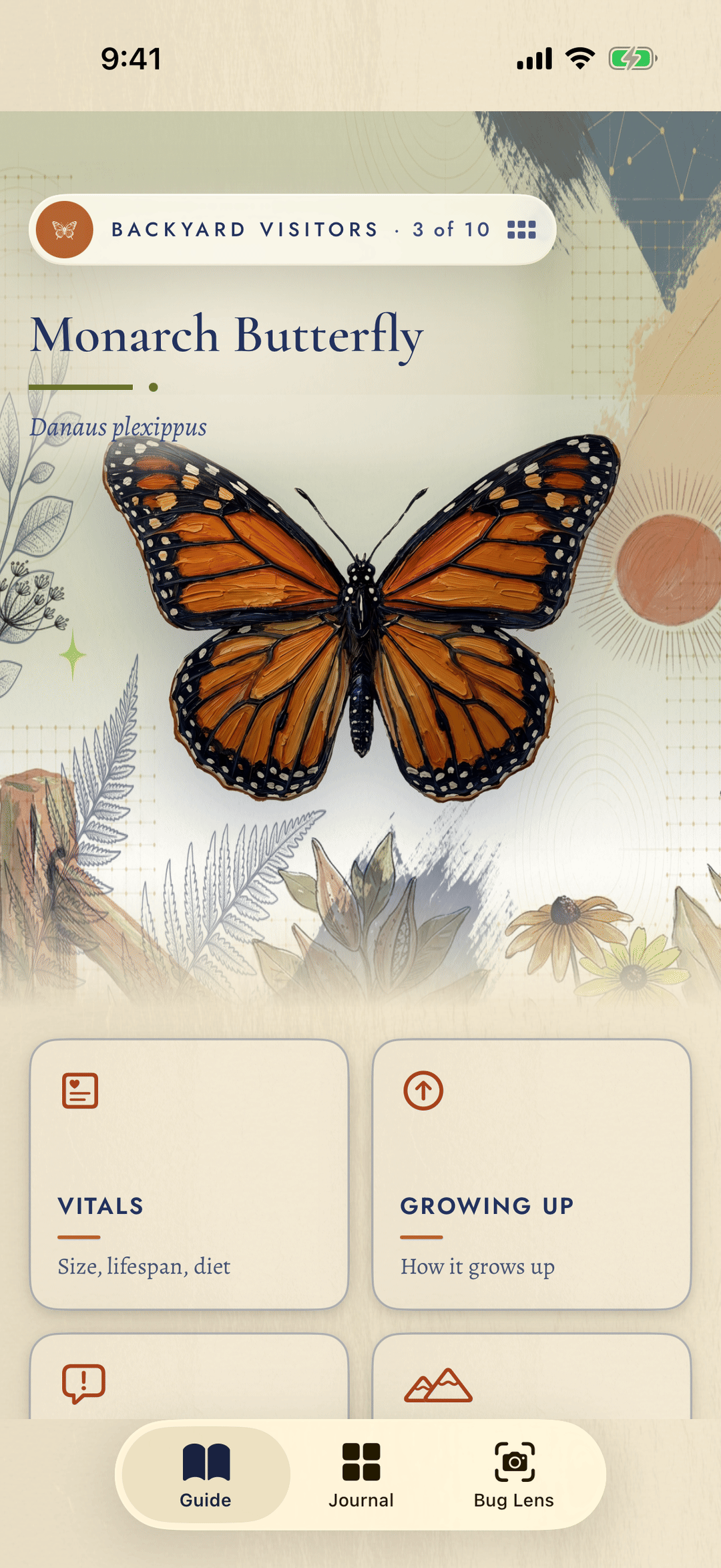
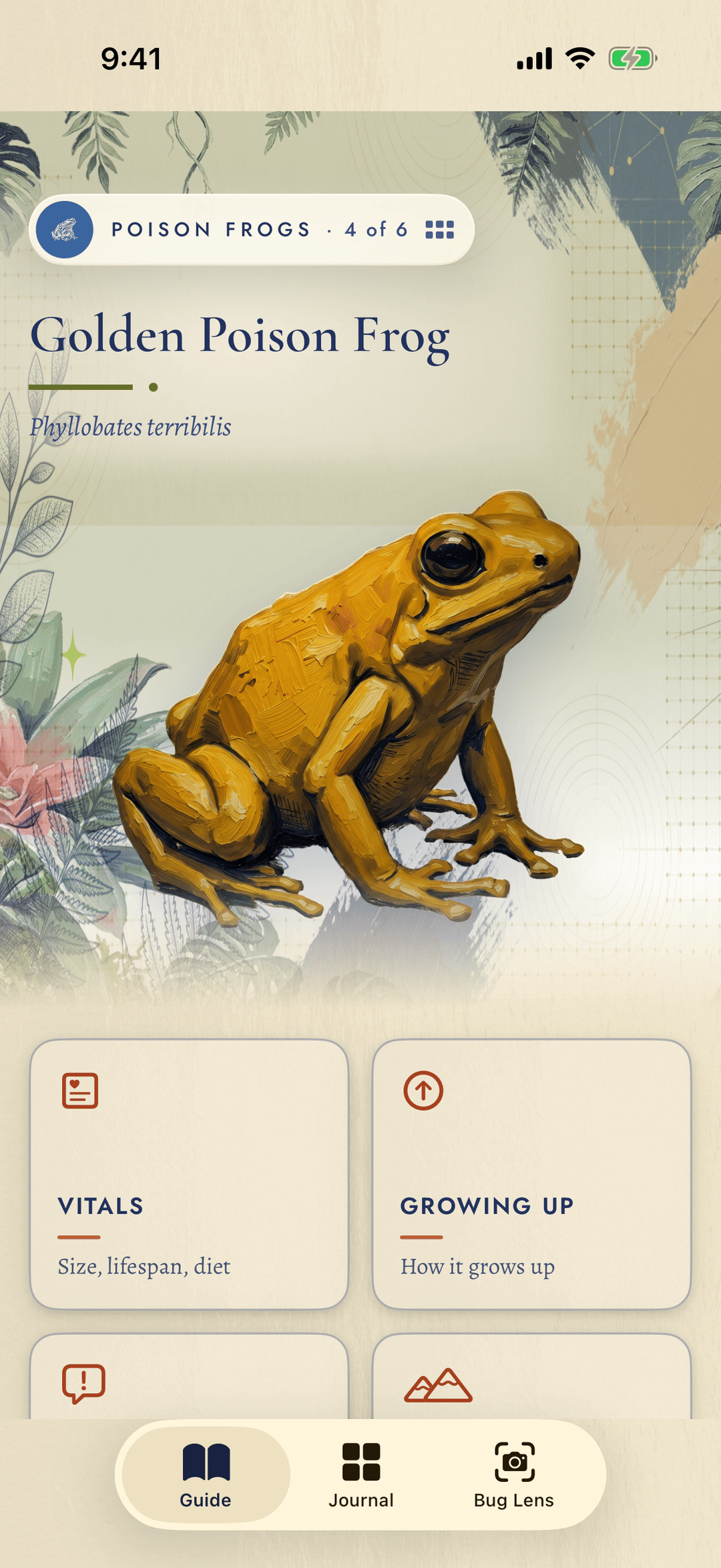
Thirty-six creatures, each one hand-finished as a painted plate.
Snakes, frogs, butterflies, the quiet ones in the soil. A shelf worth coming back to.
The Bug Lens
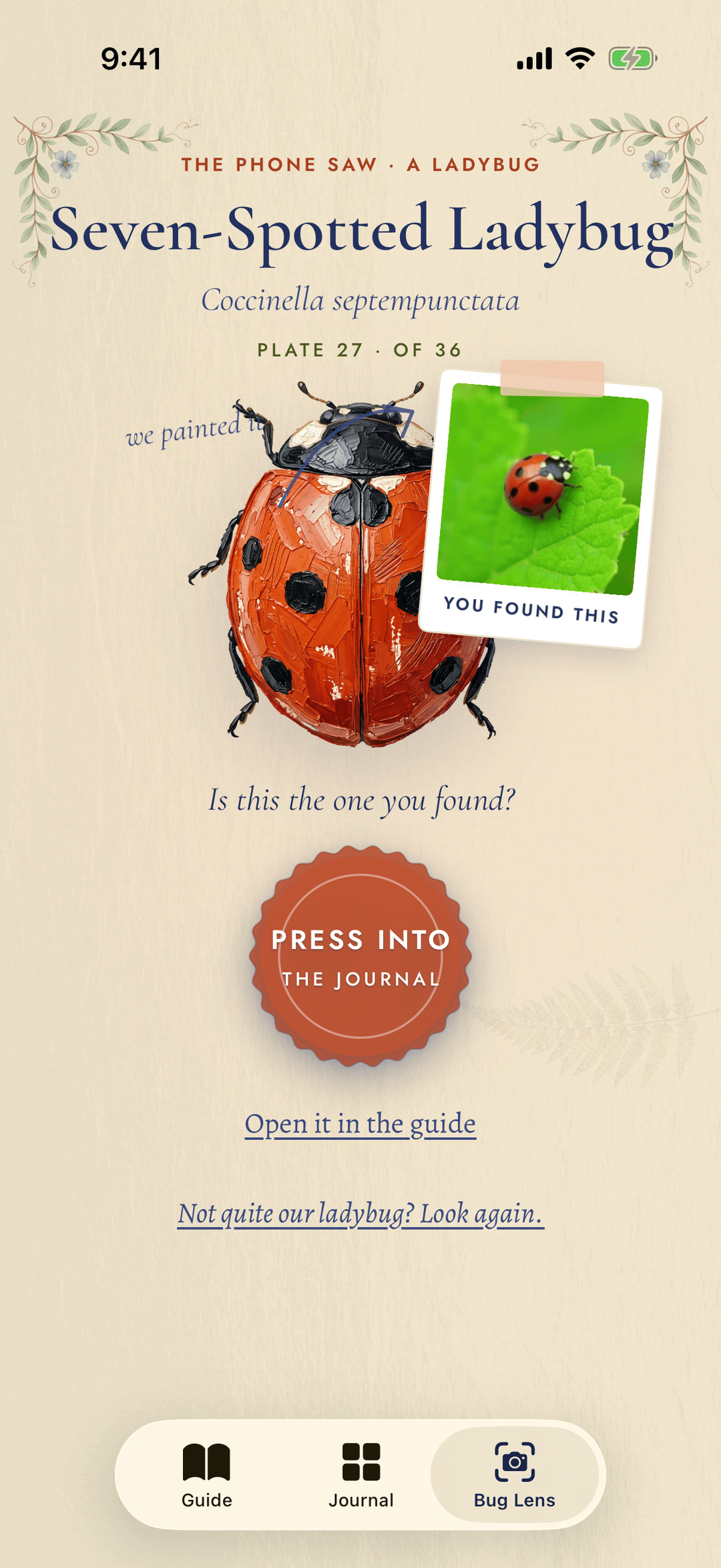
Point the phone at what you found and the Bug Lens names what it sees, right there on the device.
The photo never leaves the phone. When it isn’t sure, it says so, and shows you the closest plate.
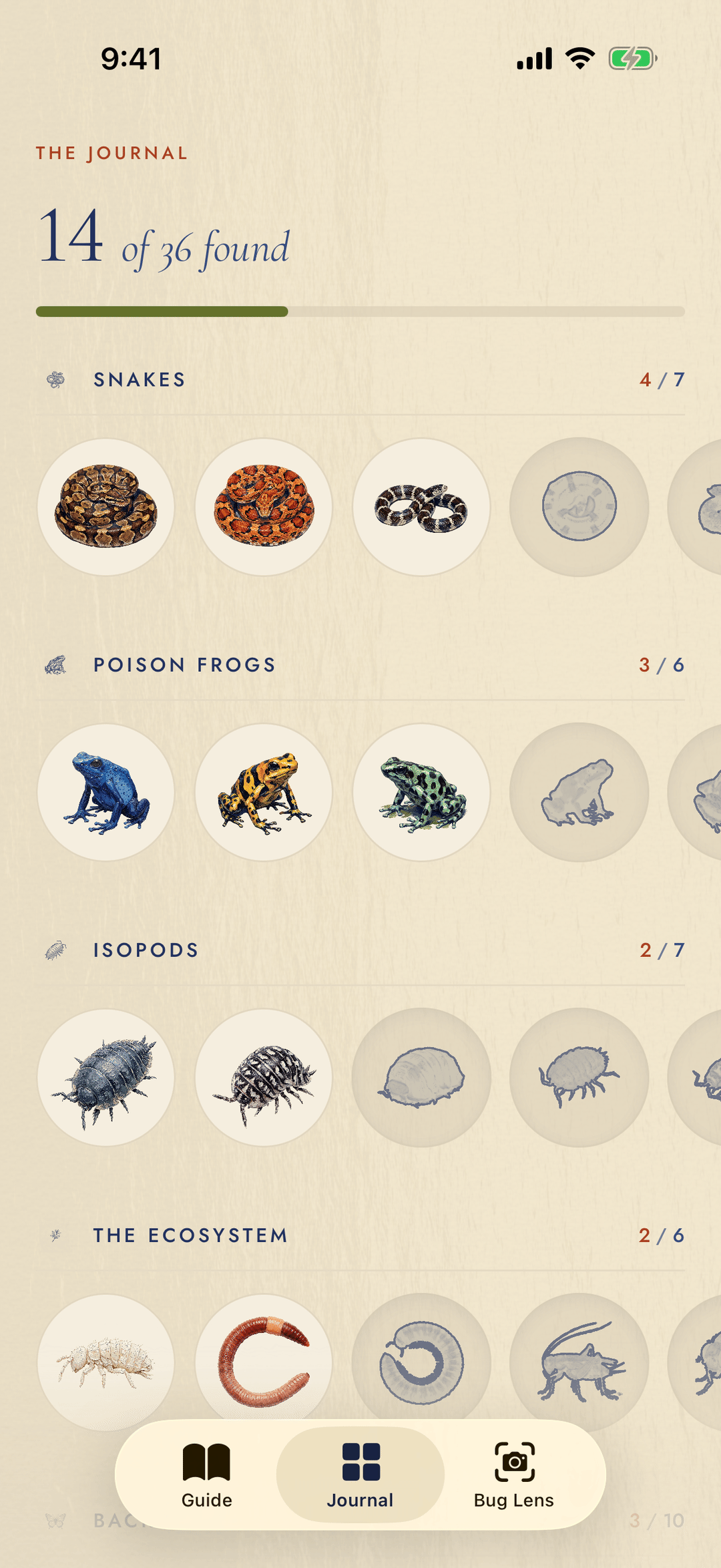
The Journal
Every creature the family finds presses into a shared collection wall.
It fills a little at a time, and the empty plates are their own kind of invitation.
Thirty-six creatures, on five shelves.
Most of the guide lives in a terrarium at home. The rest turns up under a porch light, in the grass, or on the walk to school. Every plate carries its vitals, a short story, and the kind of fact a child repeats at dinner.
-
Snakes
Ball Python, Corn Snake, California Kingsnake, Milk Snake, Western Hognose, Common Garter Snake, Green Tree Python.
-
Poison Frogs
Blue Poison Dart Frog, Bumblebee Dart Frog, Green-and-Black Dart Frog, Golden Poison Frog, Mimic Poison Frog, Strawberry Poison Frog.
-
Isopods
Common Pill Bug, Zebra Isopod, Rubber Ducky Isopod, Little Sea Isopod, Dairy Cow Isopod, Rough Woodlouse, Powder Blue Isopod.
-
The Ecosystem
Springtail, Earthworm, Bumblebee Millipede, House Cricket, Flightless Fruit Fly, Dubia Roach.
-
Backyard Visitors
Seven-Spotted Ladybug, Western Honey Bee, Monarch Butterfly, Black Garden Ant, Garden Orb Weaver, Differential Grasshopper, Common Eastern Firefly, Praying Mantis, Common Green Darner, Annual Cicada.
Found something the guide doesn’t know yet? Nominate it from inside the app. New plates get painted and added to the guide over time.
It runs on the phone, and the photo stays on the phone.
No upload step, no server call, and nothing to delete afterwards, because nothing was ever sent.
-
Point it at what you found
A kid holds the phone over the ladybug on the step and looks at it through the Bug Lens.
-
It matches on the device
Identification runs against the 36 painted plates on the phone itself. The picture is never uploaded, so the Bug Lens still works with the phone in airplane mode.
-
It says when it isn’t sure
A match is offered plainly, as in “Looks like a ladybug!”, with the closest plate alongside it. A child is never handed a confident wrong answer.
Families with a kid who picks things up.
Critterbook is built for children roughly five to twelve, and for the adult reading over their shoulder. A five-year-old browses the painted plates and asks what a thing eats. A ten-year-old runs the Bug Lens alone and argues about the vitals.
It suits homeschool mornings, a nature-study shelf, and backyard naturalists who already keep a terrarium going. With no account to make and nothing leaving the device, it is also an easy thing to hand a kid in the back seat.
Before you download.
-
Is Critterbook free?
Yes. Free to download, with no ads, no subscription, and no in-app purchases.
-
Does it need an account?
No. There is no sign-up and no login. Open the app and the guide is already there.
-
Does it work offline?
Yes. The guide, the Bug Lens, and the Journal all run on the device, so Critterbook works in the yard, at the park, and off the grid.
-
What if the Bug Lens doesn’t recognize something?
It says so instead of guessing, and shows the nearest plate it does know. The creature can then be nominated, so a new plate gets painted for a later version.
-
Does it work on iPad?
Yes. Critterbook runs on both iPhone and iPad.
-
Where do the photos go?
Nowhere. Identification happens on the device, and the photo never leaves it.
Want it for your family?
Start a conversationCritterbook works offline, and a child’s photos never leave the phone.